
I keep running into the same design choice: should the agent keep going, or should it stop and show its work?
Searching, summarizing, and drafting are often good candidates for assistance. Booking something, sending a message, or changing a record is a different class of action. Those steps need a visible pause unless someone has explicitly decided otherwise.
The loop is the product
The useful shape is usually small: observe the request, retrieve the relevant context, propose a next step, then wait for review before acting.
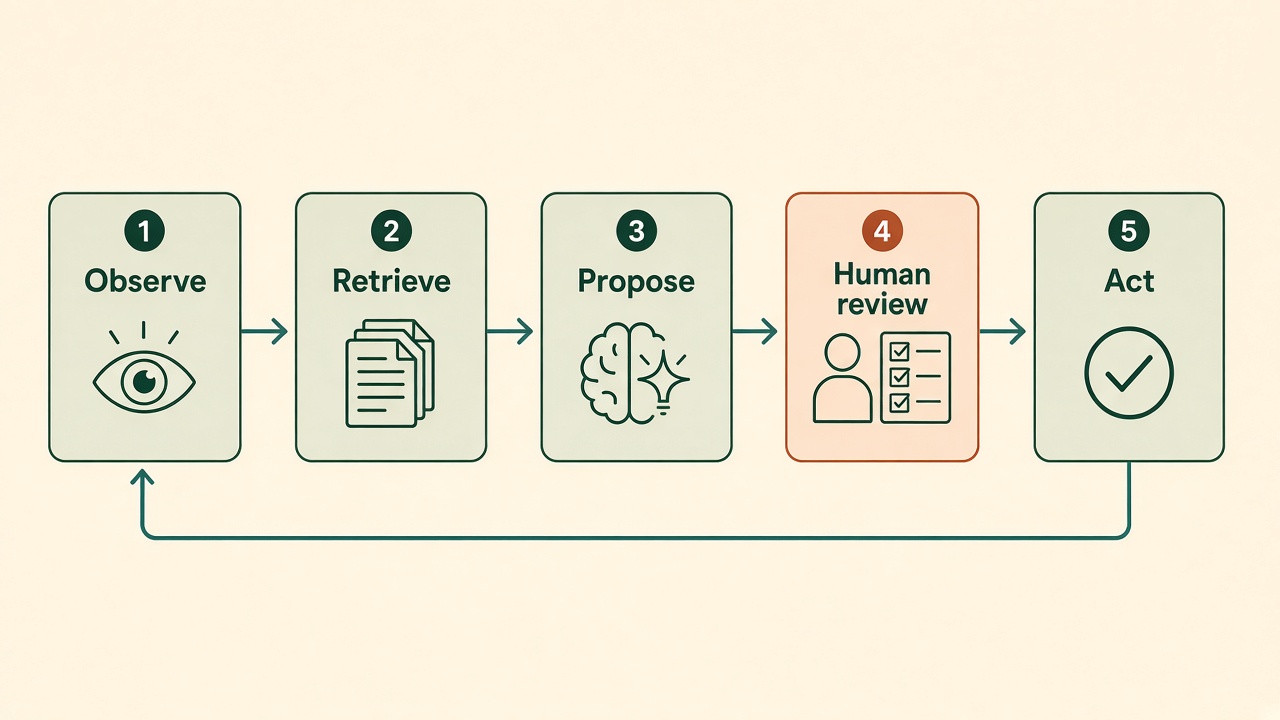
That review step is not a failure of autonomy. It is the place where the system earns trust. If the evidence is thin, the proposal should say so. If the next action is cheap to undo, the pause can be lighter. If it is expensive, the pause should be obvious.
Show the evidence with the proposal
A review queue is more useful when it shows why a proposal exists: the sources it used, the fields it extracted, and the action it wants to take. Approving a blank recommendation is guesswork. Approving a short, inspectable card is work.
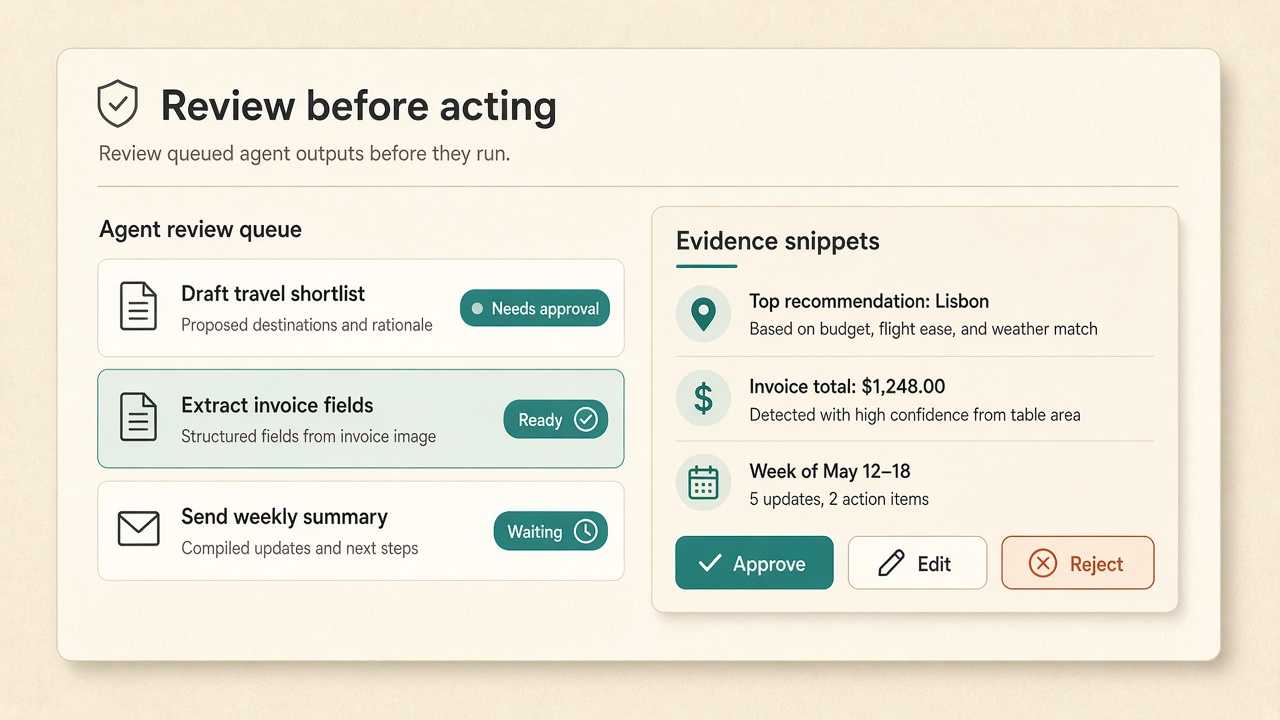
I’m experimenting with this pattern in a small Agent Review Console. The point is not a clever interface. It is to make the handoff feel like part of the workflow instead of an afterthought.
The best version is still the one I can explain without hiding the important choice. If an agent cannot show its work, I am not ready to let it act.